
Move better.Feel stronger.Stand Straight Up.
A live corrective exercise benefit for people who sit for a living. Two supervised 30-minute sessions each week, delivered live by video to wherever your team already works, counteracting the posture a desk builds. No equipment, no travel, no gym membership.
Two patterns explain
most desk-related pain.
Sitting does not injure people at random. It draws the body into two predictable postural patterns, and both respond to a considered program of stretching and strengthening.
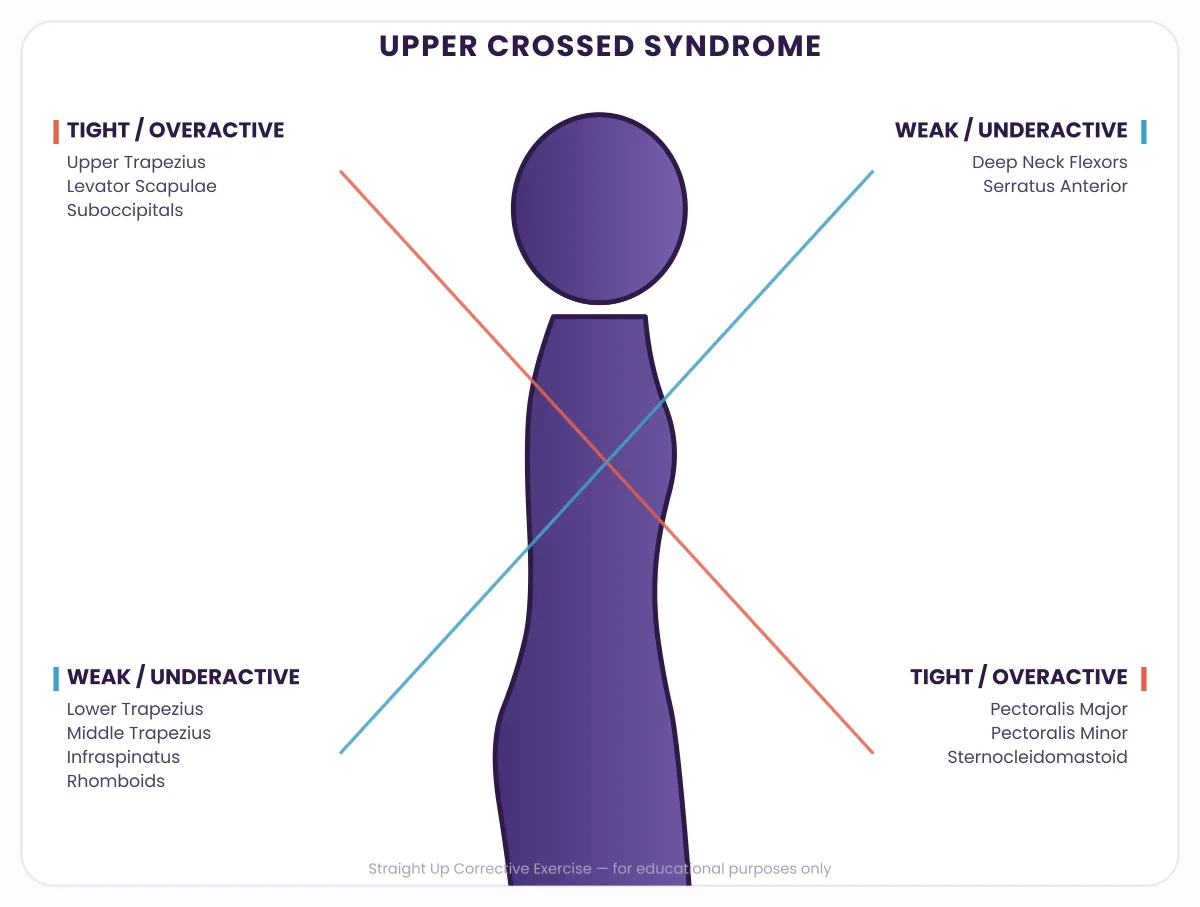
Upper Crossed Syndrome
The head drifts toward the monitor, the chest and neck tighten, and the muscles holding the shoulder blades back stop participating. We lengthen the front and rebuild the back.
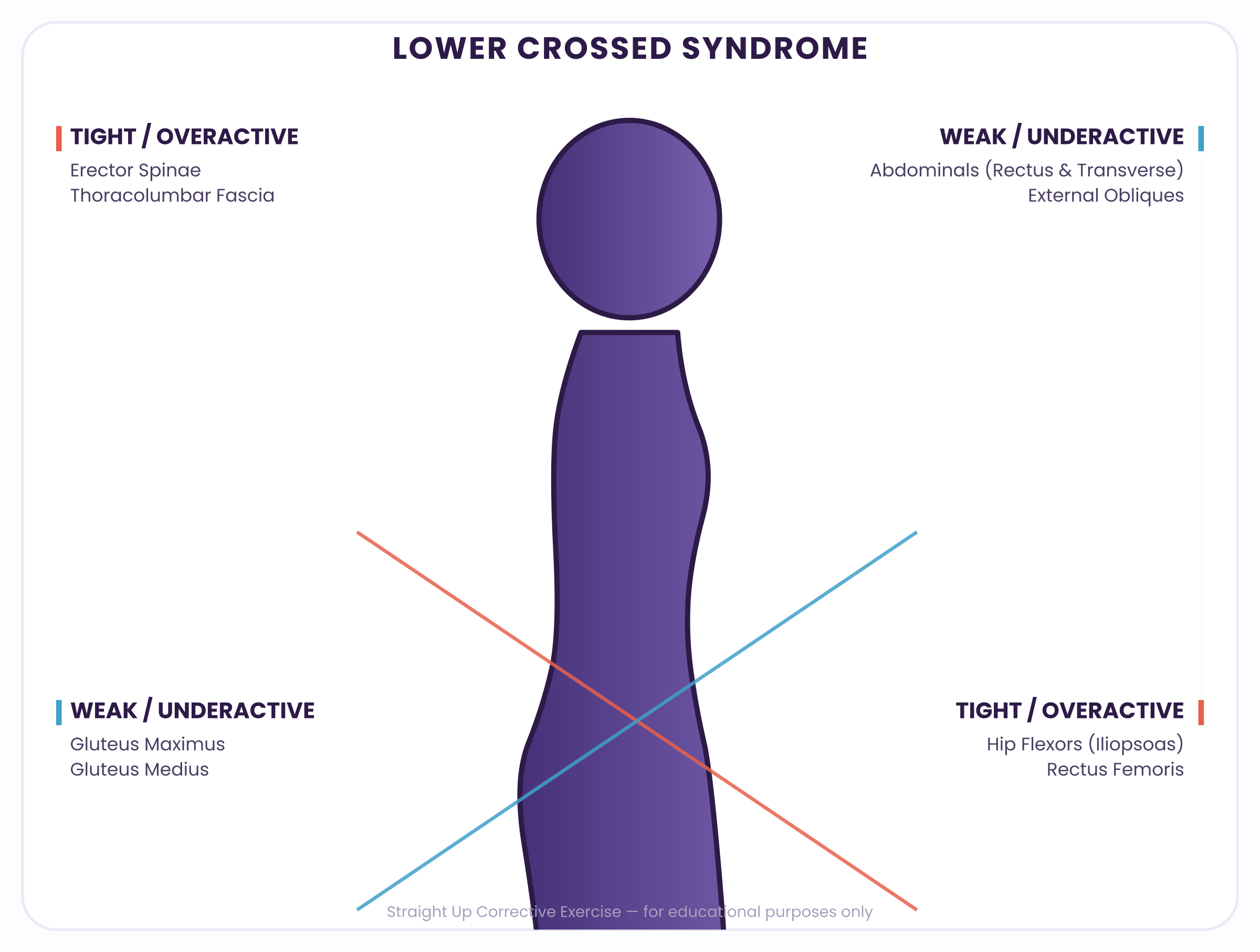
Lower Crossed Syndrome
Hours of hip flexion shorten the front of the hip and quiet the glutes, so the lower back takes on work it was never meant to do. We open the hip and restore the posterior chain.
Why these programs
don’t stick.
Most companies have already bought something for this. A wellness stipend, an app with an exercise library, an ergonomic assessment, a platform with a physical therapist behind a chat window. The programming is rarely the problem.
The problem is that participation collapses after the first month. A benefit nobody uses is not a benefit, and every People Ops lead who has renewed one of these already knows it.
Nothing here depends on anyone remembering to open an app. There is a slot on the calendar twice a week, and a person on the other end who notices when you are not in it.
Live coaching, and
education.
What changes the pattern is actually taking steps to correct it, with expert advice on how to do it properly and safely, and why it matters.
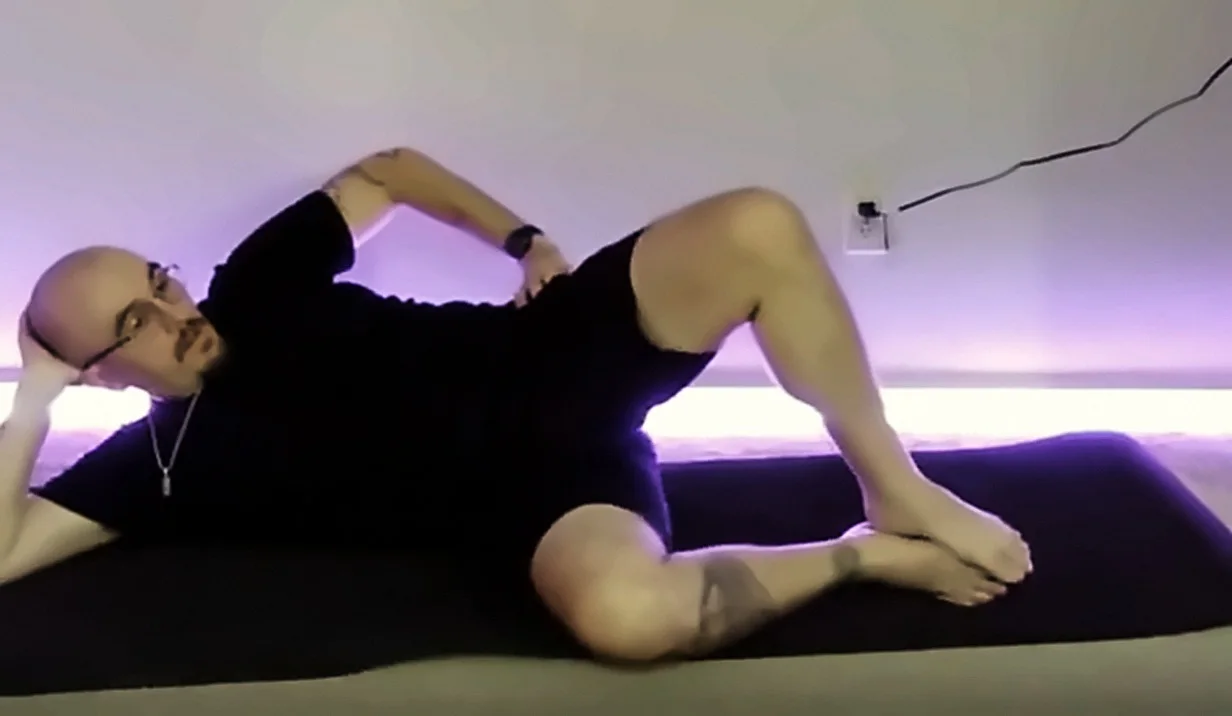
Correction in real time
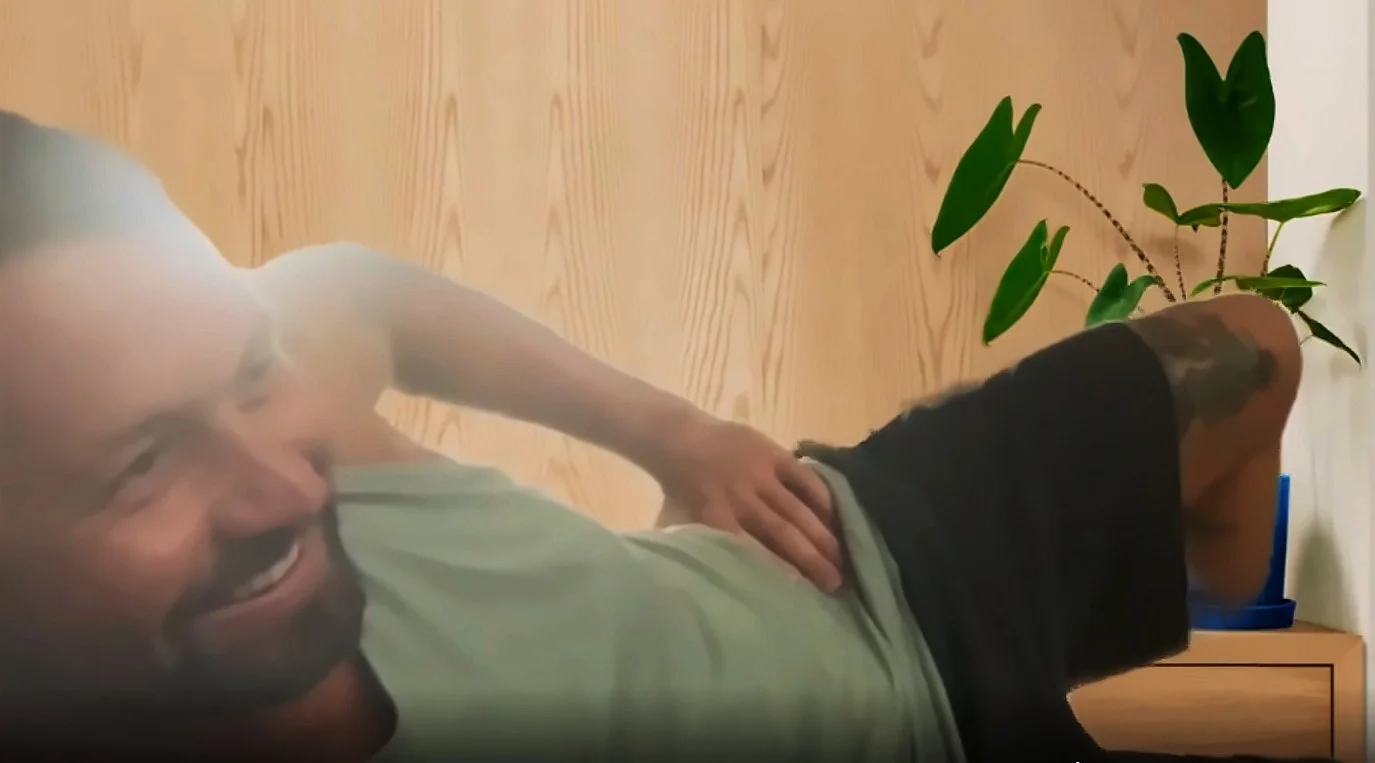
Every session is live on Google Meet, at a fixed slot on the calendar. Movements are monitored and cued as they happen, adapted to each participant.
Education that carries over
Each exercise is explained: which muscle, why it went quiet, and how it connects to the complaint. Participants leave understanding their own body, not merely having finished a workout.
The program in
three straightforward steps.
Start with an introductory call
We speak for 30 minutes. I walk you through the program and set your cohort’s recurring slot with you. The contract and participant waiver come afterwards, so nothing is signed or charged on the call.
Two 30-minute sessions a week
Live on video, with no equipment beyond a mat and floor space. Targeted stretching for the overactive muscles, light isometric work for the underactive ones, and an explanation of why each one matters.
Progress you can feel and report
As posture improves, cueing lightens and the work grows progressively harder, without causing exhaustion or requiring a change of clothes. Participants notice they sit taller by default and finish the day with less tightness. You receive a simple summary of attendance and program focus for your wellness reporting.
Book a 30-minute introductory call.
Half an hour on video, with me. No sales script, no obligation. You will leave the call knowing exactly what your team would be doing, when, and what it costs.
Sound for the person. Accountable to the business.
What the program trains, and what you actually receive each month. Individual results vary with adherence and starting condition, and nothing here is a medical guarantee.
Where the evidence actually stands.
- Khorramroo, Rostami and Bafrouei. Corrective exercises strongly improve posture but fail to produce consistent clinical or functional benefits in patients with upper crossed syndrome: a systematic review and meta-analysis of randomized controlled trials. BMC Sports Science, Medicine and Rehabilitation, 2026;18:302. doi:10.1186/s13102-026-01707-8
- Seidi et al. The effect of various therapeutic exercises on forward head posture, rounded shoulder, and hyperkyphosis among people with upper crossed syndrome. BMC Musculoskeletal Disorders, 2024;25:105. doi:10.1186/s12891-024-07224-4
- Yaghoubitajani et al., International Archives of Occupational and Environmental Health, 2022.
What the first cohort
actually said.
A one-month pilot ran twice-weekly sessions with a small internal cohort. All six participants said they would advocate for their employer paying for the program.
Small sample, reported in full.

“I didn’t even have any coffee all day after my session because I felt so good and energized.”
Jake S.“Learning about how the muscles interact allowed me to mentally visualize what areas I should be feeling. Really appreciated the knowledge transfer.”
Sonya L.“Personally, for me it is to help ease aches and pains and to maximize my athletic performance in the sports I enjoy. I don’t want all this time at the desk to make me prone to injury or make it harder to progress.”
Chase H.Questions HR asks first.
Something else on your mind? Write to me directly and I will answer it properly.
Get in touch →Everyone joins a video call with a mat on the floor. We work through targeted stretching for the muscles sitting has shortened, then light isometric holds for those that have gone quiet. I watch each person, correct positions aloud, and explain what should be working. Thirty minutes, no equipment, and no need for a change of clothes.
Beyond ten, I cannot see everyone well enough to correct them, and correction is the entire point. If you need to cover more people, we add cohorts rather than enlarging the group.
A video cannot see you compensating; I can. You receive real-time feedback, individual cueing, and an actual person expecting you on the call, which is why attendance holds up in a way self-guided content generally does not.
Sessions run only 30 minutes with no travel, so they slot into a workday almost anywhere. We schedule each cohort's recurring slot around your team's time zones on the intro call.
Most participants notice something within the first few weeks, usually less end-of-day tightness. Structural change to a postural pattern takes longer, which is why the minimum contract is three months. Results vary with adherence and starting condition.
No. This is corrective work rather than conditioning. If someone can get to the floor and back up, they can take part, and if they cannot, we adapt. Every participant signs a waiver confirming they have no medical condition that would prevent them from performing simple exercises.
$2,000 per month per ten-person cohort — $200 per employee per month, or about $50 per coached hour per person. That is less than a single physical therapy visit in most U.S. markets, for eight supervised sessions. Six, nine and twelve-month contracts receive 5%, 10% and 15% off respectively, on a three-month minimum.
A platform delivers programming through an app and cannot see a participant compensating. This is a live person watching and correcting, which is why attendance holds.
Sessions are recorded, but the recordings are not distributed. Anyone who misses a session can ask me for a summary of what was covered, so they can keep their consistency between sessions.
Yes. Finding the right slot for each person often takes some swapping early on, and I would rather sort that out than leave someone in a session they cannot reliably attend. What does not happen is participants moving between cohorts at will — a settled roster is what makes attendance tracking meaningful and keeps adherence up.
Not required, but strongly encouraged. I understand that not everyone is comfortable on camera and nobody is pushed. But being able to see you is what lets me correct you, and a participant I cannot see gets a noticeably thinner version of the program than one I can.
Every participant is told to stop immediately if a movement produces sharp or electrical pain. True injuries are very rare with bodyweight corrective work, but if one happens the protocol is the same: contact a medical professional straight away, and get clearance before returning to a session.
Invoices are issued monthly. Net terms and a W-9 are available on request.
Attendance by cohort every month, showing who came and who did not. Participants are also surveyed at the start and again at three months, and you receive those results in full, including the unflattering ones.
Straight Up Corrective Exercise is a California LLC and I carry professional liability insurance.
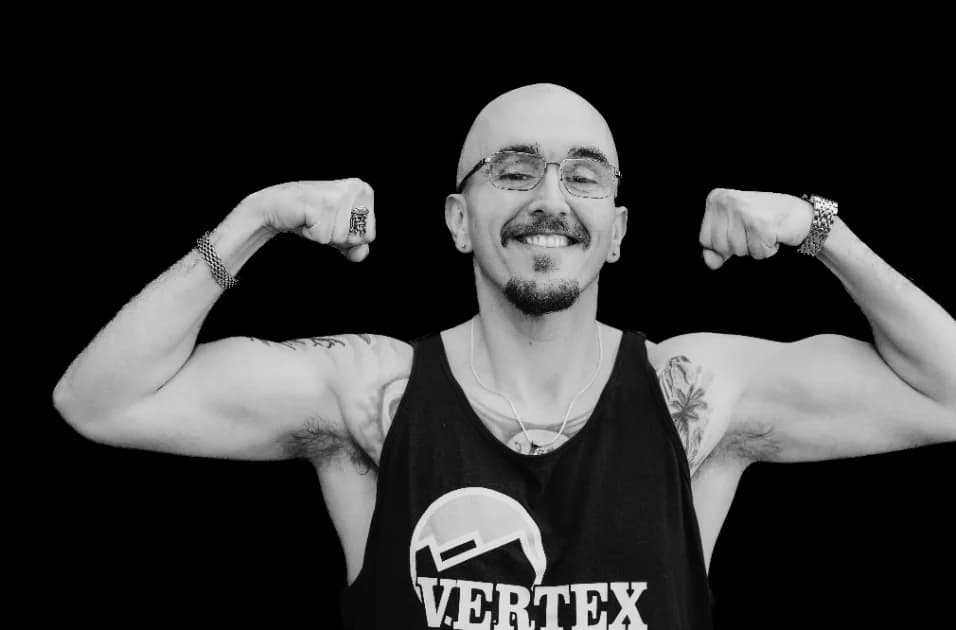
Lucas Judson
NASM Certified Corrective Exercise Specialist, Personal Trainer and Group Fitness Instructor. Based in Santa Rosa, California, with clients coached across the world.
I believe that teaching is the greatest part of coaching. Helping my clients understand their body, and how to allow it to move properly, doesn’t just end in our session. The goal is to educate and create long-lasting habits they can take with them toward a healthier lifestyle.
More about Lucas →Begin with one cohort and let the results make the case for the second.
A 30-minute introductory call: the program, the schedule, and precisely what your team would be doing on a Tuesday morning.